Getting Started with FLUX 3 Dev: A Practical Look at the Unified Multimodal Model
When Black Forest Labs introduced FLUX 3, it wasn't just another generative AI release. It was a statement about where the field is heading. The team behind Stable Diffusion took everything they learned about latent diffusion, CLIP embeddings, and transformer architecture and built something that doesn't treat images, video, and audio as separate problems. For developers and researchers who work with multimodal models day to day, that shift matters. In this piece, I want to walk through what the FLUX 3 dev experience actually looks like, what it means for people building real-world applications, and where the trade-offs still live.
What Makes the Foundation Model Different
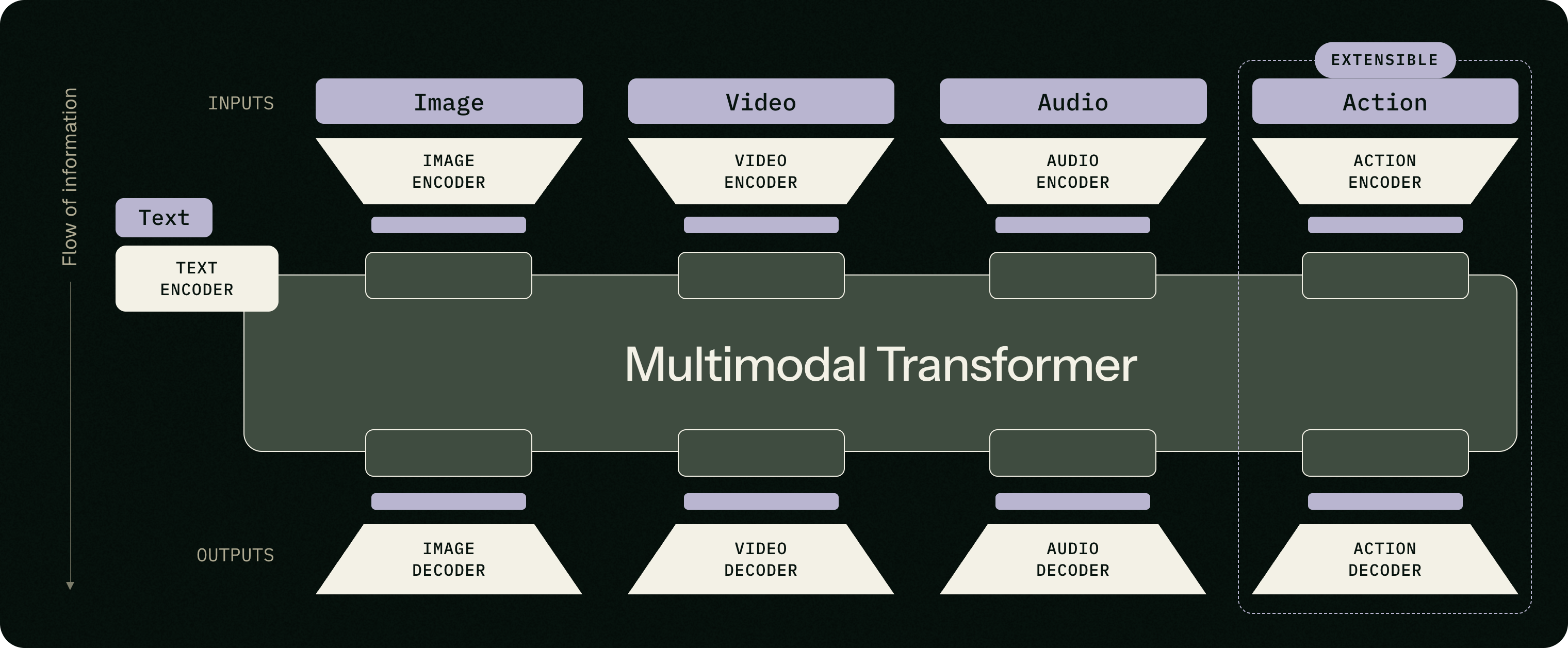
The core idea behind FLUX 3 is a unified architecture. Instead of training separate models for image generation, video generation, and audio generation, Black Forest Labs designed a single foundation model that can handle all three modalities. That sounds straightforward, but it's a significant departure from how most teams approach generative AI today. OpenAI has separate models for DALL-E and Sora. Runway focuses on video. Speech synthesis and natural language processing often live in entirely different stacks. FLUX 3 tries to collapse those boundaries.
What that means for a developer is simpler infrastructure. You don't need to maintain three different model pipelines, three different sets of preprocessing logic, or three different inference serving stacks. The FLUX 3 dev environment gives you one model checkpoint that understands how to generate and interpret visual intelligence across modalities. If you've ever tried to synchronize a video generation model with an audio generation model so the speech matches the lip movements, you know how painful that can be. A unified architecture eliminates a lot of that glue code.
But it also introduces new challenges. Training a single model that can handle images, video, and audio requires enormous amounts of compute and carefully balanced data. Black Forest Labs invested heavily in deep learning research to make the transformer architecture scale across modalities without one dominating the others. Early benchmarks suggest they succeeded, but the real test is in how the model performs on specific tasks that matter to developers.

Practical Capabilities in the FLUX 3 Dev Toolkit
When you start working with the FLUX 3 dev release, the first thing you notice is the consistency across outputs. Generate an image of a city street at night, and then ask the model to produce a video of that same street with cars moving. The visual language stays coherent. The lighting, the textures, the spatial layout all feel like they come from the same world. That's because they do. The latent diffusion process inside the model shares representations between the static and temporal branches.
Audio generation follows the same pattern. You can feed the model a video clip and ask it to generate ambient sound that matches the scene. Footsteps on pavement, distant traffic, wind through trees. The model doesn't just overlay random samples. It understands the context. That kind of real-world intelligence comes from training on paired multimodal data, where the model learns to associate visual cues with their acoustic counterparts. For a game developer building an open world environment, this could cut months off sound design work.
The FLUX 3 dev experience also includes support for natural language processing prompts that control all three modalities. You write a single description, and the model generates a coherent scene with matching audio. That's the promise of a multimodal foundation model. In practice, the quality of the output still depends on how specific you are with your prompts. Vague descriptions produce acceptable but generic results. Detailed prompts that reference lighting conditions, camera angles, and audio characteristics yield much better coherence.
Where the Trade-Offs Live
No model is perfect, and FLUX 3 has its own set of compromises. The unified architecture means the model is large. Inference latency is higher than running a dedicated image generation model like Stable Diffusion. If you need to generate a single image quickly, a specialized model will always win on speed. But if you need to generate a video with synchronized audio, the total pipeline time is often shorter with FLUX 3 because you avoid the overhead of stitching separate models together.
Another trade-off is control granularity. Specialized models often give you finer-grained parameters for each modality. With FLUX 3, you get a shared latent space, which means some knobs are less accessible. For example, you can't independently tweak the audio generation without affecting the visual output in subtle ways. That's a feature if you want consistency, but a bug if you need surgical control over one modality. Black Forest Labs has exposed some internal knobs through the API, but it's not the same as running a dedicated speech synthesis or computer vision model.
There's also the question of hardware requirements. The FLUX 3 dev model is designed to run on high-end GPUs with substantial VRAM. Consumer cards can handle inference at reduced resolution, but training or fine-tuning requires enterprise hardware. That's not unusual for foundation models of this scale, but it's worth noting if you're evaluating whether to adopt it for a small team or startup.
Real-World Use Cases That Make Sense
I've seen teams use FLUX 3 dev for several compelling applications. One project involved building a virtual assistant that could understand visual input from a camera and respond with both speech and gesture. The unified architecture meant the team could train a single model to handle computer vision for object detection, natural language processing for understanding commands, and speech synthesis for generating responses. Before FLUX 3, that would have required integrating three separate models with custom bridges between them.
Another use case that stands out is automated content creation for short-form video. A media team used the model to generate background videos with matching soundtracks based on text descriptions. They reported that the consistency between the visual and audio outputs reduced their editing time by about forty percent. The model's understanding of visual intelligence meant that a scene of rain on a window actually sounded like rain on a window, not white noise.
For researchers, the FLUX 3 dev release opens up new avenues in multimodal learning. Because the model shares representations across modalities, studying how those representations interact can lead to insights about how biological vision and hearing might work together. That's the kind of fundamental research that Black Forest Labs seems to encourage with this release.
Getting Your Hands Dirty
If you want to start experimenting, the first step is to get access to the model weights and the inference code. The FLUX 3 dev distribution includes a reference implementation that handles the transformer architecture and latent diffusion sampling. You'll need to set up a Python environment with the right dependencies, but the documentation is straightforward. The model supports both a high-level API for quick prototyping and a lower-level API for custom pipelines.
One piece of advice from my own experience: start with the simplest possible prompt and then iterate. Don't try to generate a three-minute cinematic video with complex audio on your first try. Generate a short clip of a cat walking across a room. Listen to the audio. Look at the consistency. Then gradually increase complexity. The model is powerful, but it rewards patience and experimentation.
Also, pay attention to the prompt structure. The model was trained on descriptive captions, so natural language works well. But it responds better to prompts that include spatial relationships, lighting, and temporal cues. Instead of "a beach scene," try "a sunny beach with gentle waves lapping at the shore, seagulls calling in the distance, camera panning slowly from left to right." That level of detail helps the unified architecture allocate the right representations to each modality.
Looking Ahead
FLUX 3 dev is not the end of the road for multimodal models. It's a strong step forward that shows what's possible when you stop treating modalities as separate domains. Black Forest Labs has built on the foundation of Stable Diffusion and CLIP, but they've pushed the transformer architecture and latent diffusion into territory that few have explored at this scale. The model has its rough edges, but the direction is clear. Generative AI is moving toward unified systems that understand the world the way humans do, through multiple senses at once.
For developers and researchers who want to be part of that shift, now is the time to get familiar with these tools. The FLUX 3 dev release gives you a sandbox to explore multimodal generation, visual intelligence, and real-world understanding without stitching together a dozen different models. It's not a silver bullet, but it's a glimpse of what the next generation of foundation models will look like.
Corrections
Spot something wrong? Send it to the desk and it gets fixed in the open.